Skip to content
Go East Africa Safaris
A dense column of wildebeest moving across open grassland

Midrange migration safari · Tanzania

8-Day Tanzania Great Migration Safari — Serengeti, Ngorongoro & Lake Manyara

Eight days is enough to stop chasing and start watching. This circuit gives the Serengeti four nights — split between the central plains and the north — which is what it takes to sit with a herd rather than drive past one, and still covers Tarangire, the Ngorongoro Crater and Lake Manyara. It is built for travellers whose main reason for coming is the migration, with the rest of the northern circuit around it.

  • 8 days
  • Tanzania
  • Midrange migration safari
  • On Request

The journey

A closer look at your trip.

Eight days is enough to stop chasing and start watching. This circuit gives the Serengeti four nights — split between the central plains and the north — which is what it takes to sit with a herd rather than drive past one, and still covers Tarangire, the Ngorongoro Crater and Lake Manyara. It is built for travellers whose main reason for coming is the migration, with the rest of the northern circuit around it.

ArushaTarangireSerengetiNgorongoroLake Manyara
Duration
8 days / 7 nights
Countries
Tanzania
Trip style
Midrange migration safari
Transport
4x4 Land Cruiser
Start
Arusha
End
Arusha
Price
On Request

Trip highlights

The places that shape this journey.

  • 01

    Four nights in the Serengeti, central and northern

  • 02

    Time to wait at the river rather than drive past

  • 03

    Tarangire's baobab country and dry-season elephants

  • 04

    A full morning on the Ngorongoro Crater floor

  • 05

    Lake Manyara's tree-climbing lions and flamingo flats

Your route

Across Tanzania.

Arusha → Tarangire → Serengeti → Ngorongoro → Lake Manyara → Arusha

We will confirm the day-by-day sequence and overnight stops in your detailed proposal.

KENYATANZANIAArushaTarangireSerengetiNgorongoroLake Manyara

Schematic route · See the day-by-day programme for travel details.

Day by day

8 days in East Africa.

  1. Day 1

    Arusha to Tarangire National Park

    Depart Arusha mid-morning for the short drive to Tarangire, arriving for lunch. The afternoon is spent game driving along the Tarangire River, which is the reason the park works as it does: it is the only reliable water for a long way, so in the dry season the game comes to it. Elephant numbers here are among the highest in Tanzania, and the park's ancient baobabs give it a look nothing else on the circuit shares. Dinner follows, and the night is spent at Tarangire.

    Overnight
    Tarangire Simba Lodge
    Meals
    Lunch and dinner
  2. Day 2

    Tarangire to the central Serengeti

    A long but genuinely interesting driving day. Climb through the Ngorongoro highlands, stop on the crater rim for the view down into the caldera, then descend to the Serengeti plains. Once through Naabi Hill gate the grassland opens out completely — the name comes from the Maasai siringet, meaning the place where the land runs on forever, which is not an exaggeration. Afternoon game drive towards Seronera. Dinner and overnight in the central Serengeti.

    Overnight
    Serengeti Serena Safari Lodge
    Meals
    Breakfast, lunch and dinner
  3. Day 3

    A full day in the central Serengeti

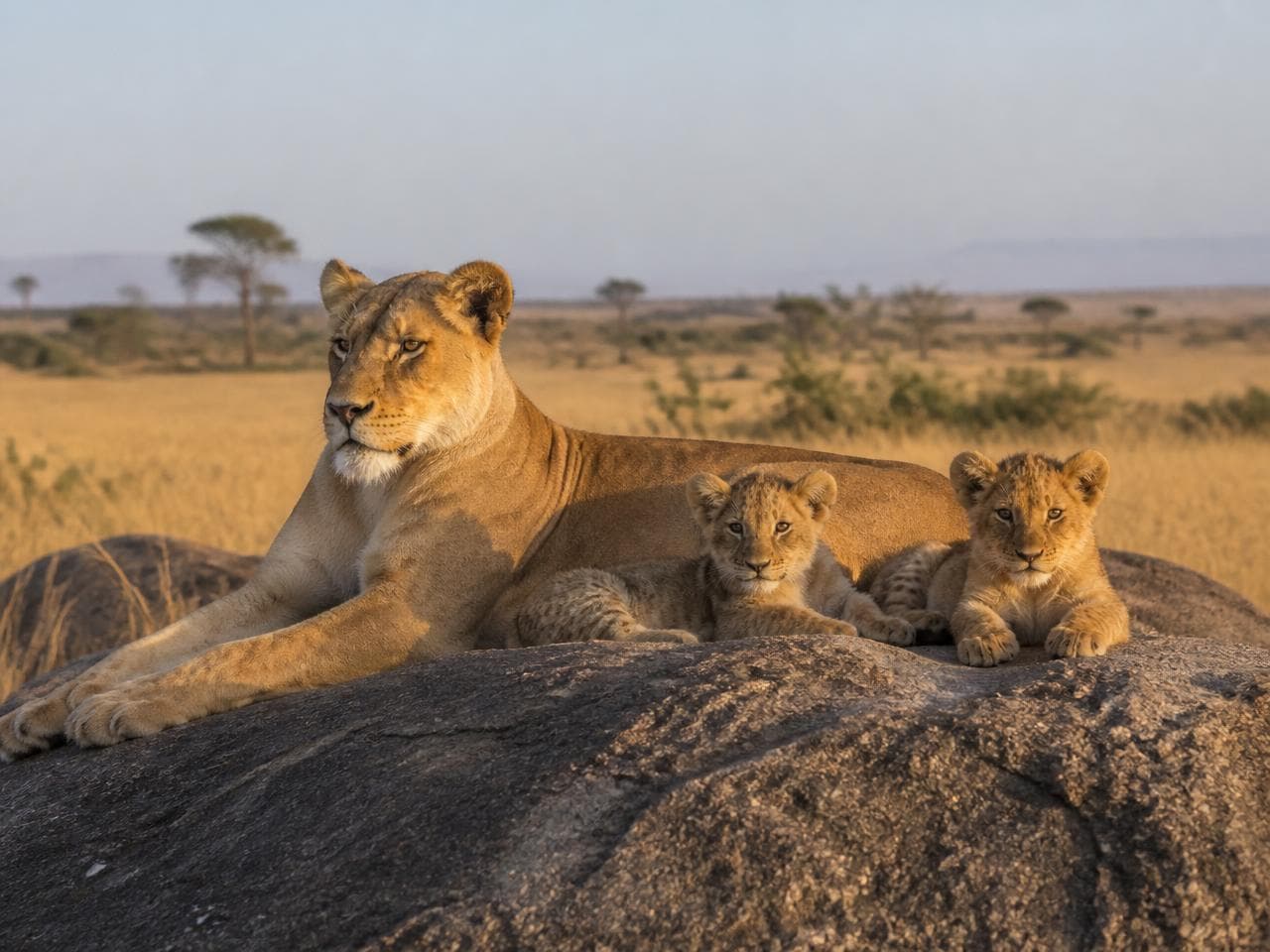
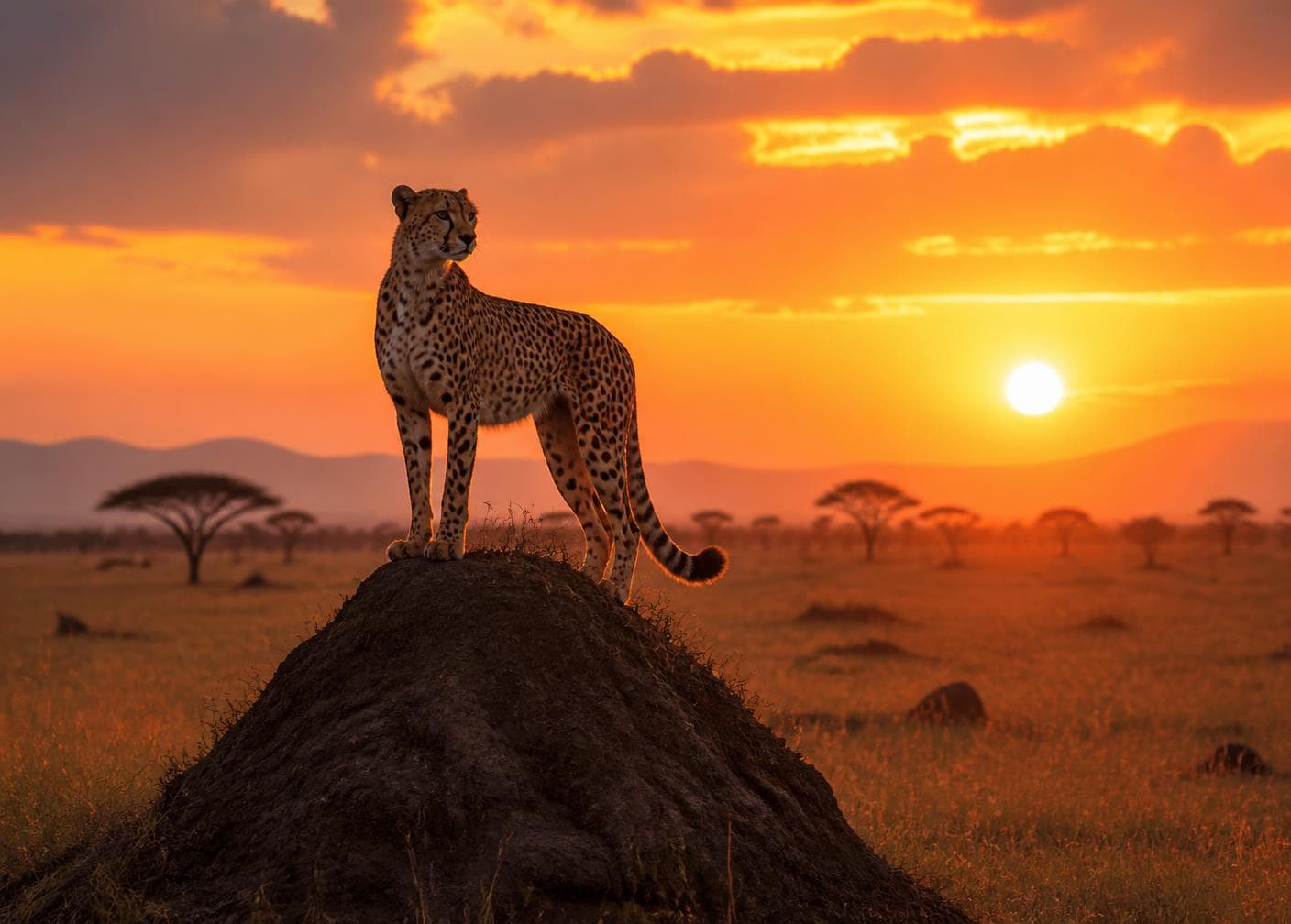
    The Seronera valley has permanent water, and that makes it one of the most reliable predator areas in East Africa regardless of where the migration is — resident lion prides, leopard in the riverine fig trees, and cheetah out on the open grass. A full day with a picnic lunch lets you follow whatever you find rather than turning back for lunch. If the herds are currently in the central or western Serengeti, this is where you meet them. Dinner and overnight.

    Overnight
    Serengeti Serena Safari Lodge
    Meals
    Breakfast, picnic lunch and dinner
    Acacia woodland and open grass along the Seronera valley in the central Serengeti
    Seronera holds resident predators year-round, whatever the migration is doing.
  4. Day 4

    North to the migration

    Move north today, through progressively more rolling and rockier country, towards wherever the herds are reported to be. In the July to October window this generally means the Mara River area in the far north; earlier in the year the routing adjusts, and your guide plans the day from the latest reports rather than a fixed map. Game drive through the afternoon as you go. Dinner and overnight in the northern Serengeti.

    Overnight
    A seasonal migration camp in the northern Serengeti
    Meals
    Breakfast, lunch and dinner
  5. Day 5

    A full day in the northern Serengeti

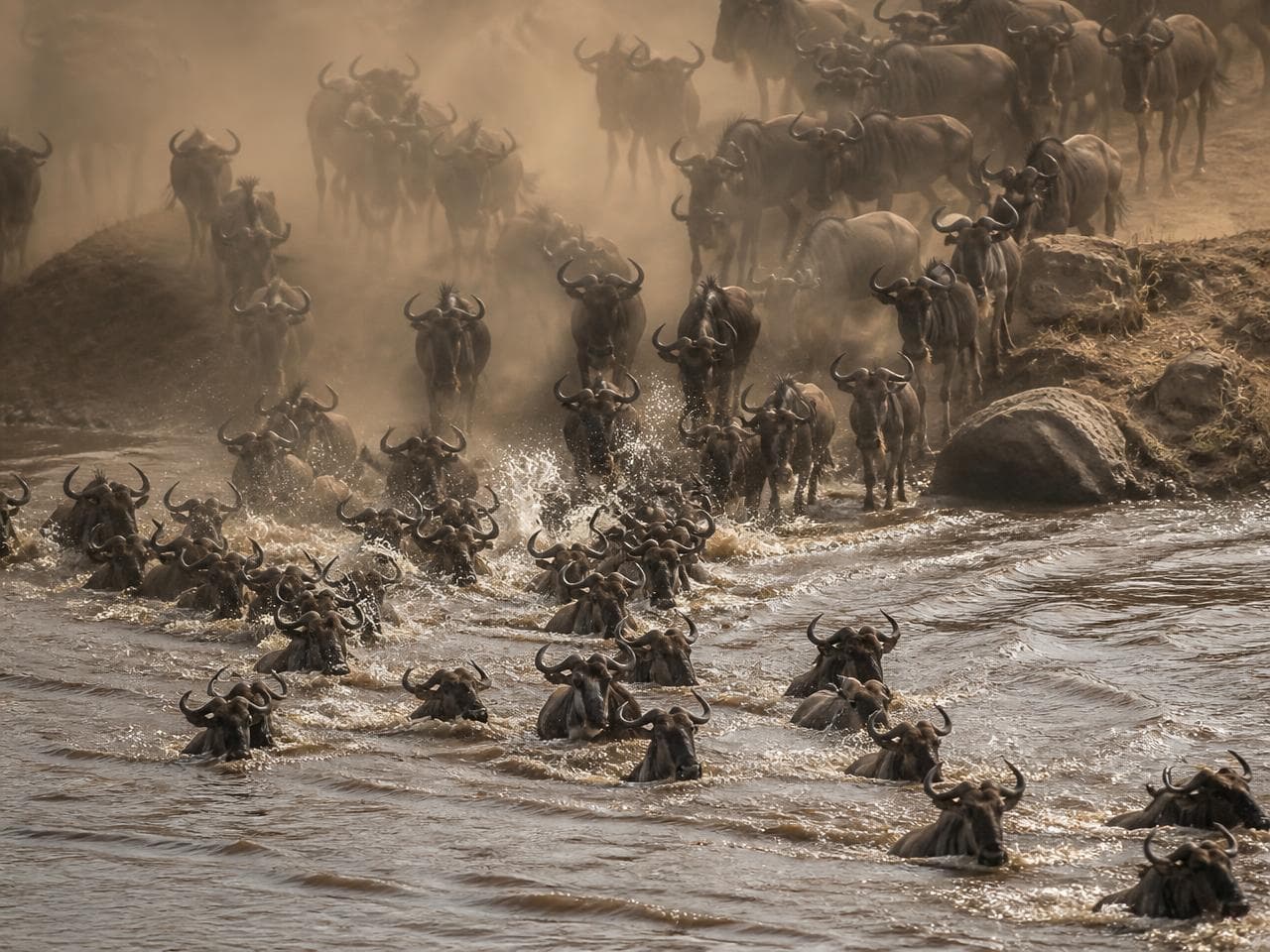
    The day the itinerary exists for. Herds gather on the riverbanks and may wait for hours before crossing — or turn away and not cross at all. That waiting is the experience, and having a full day rather than a couple of hours is what makes it bearable rather than frustrating. Beyond the crossings themselves, the north holds very large resident lion prides and the highest concentration of crocodile on the circuit. Picnic lunch out. Dinner and overnight.

    Overnight
    A seasonal migration camp in the northern Serengeti
    Meals
    Breakfast, picnic lunch and dinner
    Wildebeest gathered at the edge of a river in the northern Serengeti
    The northern Serengeti is where the Mara River crossings happen, usually between July and October.
  6. Day 6

    Northern Serengeti to the Ngorongoro highlands

    A morning game drive on the way south, with another chance at whatever the herds are doing, then the long drive back across the Serengeti and up into the Ngorongoro Conservation Area. Unlike a national park, the conservation area is shared land — Maasai families graze cattle alongside wildlife — and you will see that as you climb. Arrive on the crater rim in the late afternoon. Dinner and overnight on the rim.

    Overnight
    Ngorongoro Serena Safari Lodge
    Meals
    Breakfast, lunch and dinner
  7. Day 7

    Ngorongoro Crater to Lake Manyara

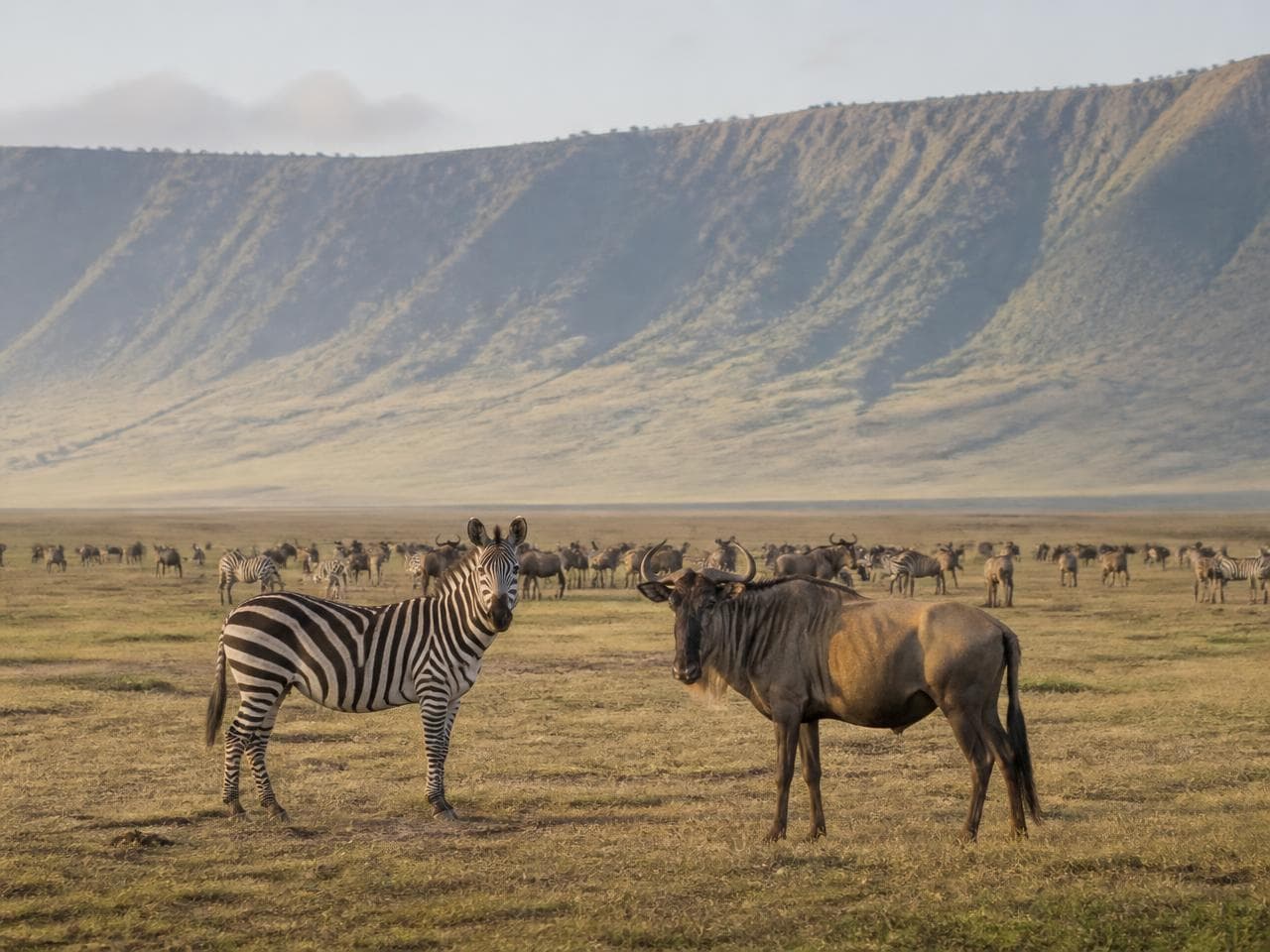
    Descend to the crater floor after an early breakfast for a half-day game drive. Roughly 260 square kilometres of enclosed grassland, swamp, forest and soda lake hold a resident population of around twenty-five thousand large animals, and it remains one of the more realistic places in Tanzania to see black rhino. Picnic lunch on the floor, then climb out and drive to Lake Manyara for dinner and overnight.

    Overnight
    Lake Manyara Serena Safari Lodge
    Meals
    Breakfast, picnic lunch and dinner
    Grassland and soda lake on the floor of the Ngorongoro Crater seen from the rim
    The crater floor holds around twenty-five thousand large animals within an enclosed caldera.
  8. Day 8

    Lake Manyara to Arusha

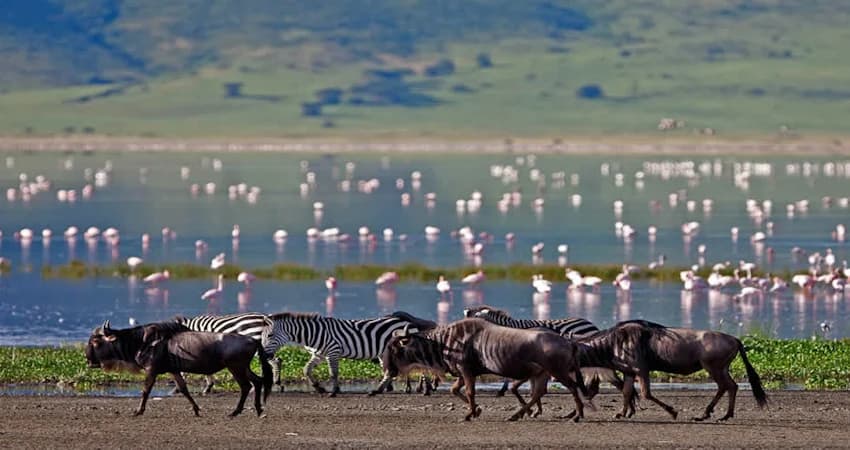
    A morning game drive in Lake Manyara National Park, a narrow strip between the Rift escarpment and the lake that packs several habitats into a small area — groundwater forest at the entrance, then open floodplain, then the soda lake itself with its flamingo and pelican. Manyara's lions are locally known for resting in the acacias, though it is a habit rather than a certainty. After the drive, return to Arusha, arriving early afternoon.

    Meals
    Breakfast

Where you stay

Accommodation for your journey.

Your written proposal will name the accommodation, room or tent arrangements and meal plan for each night. Share your preferences so we can confirm suitable available options.

Suggested accommodation

  • Tarangire

    Tarangire Simba Lodge

  • Serengeti

    Serengeti Serena Safari Lodge

    with a seasonal migration camp in the north, positioned for the current herd location

  • Ngorongoro

    Ngorongoro Serena Safari Lodge

  • Lake Manyara

    Lake Manyara Serena Safari Lodge

Suggested accommodation is subject to availability. A property of a similar standard may be proposed where necessary.

What is included

Your quotation will itemise transport, guiding, entry fees, accommodation and meals where applicable. Please confirm the included services with our team before booking.

What to allow for

Ask for an itemised list of exclusions and optional activities with your quotation so you can plan your total travel budget.

When to travel

Seasonal considerations.

The Great Migration is a natural phenomenon, not a scheduled event. The herds move through the Serengeti and Maasai Mara with the rainfall, so their position shifts from month to month and year to year, and river crossings can never be guaranteed on a given date. Broadly, the calving months in the southern Serengeti fall around January to March, the western and central plains hold the herds from roughly April to June, and the northern Serengeti and the Mara are the usual focus from about July to October. We plan around the most current reports rather than a fixed calendar.

Read the full season guide →

Who it suits

Is this the right journey?

  • Travellers who want more than a sampler: enough days to settle into each area rather than moving on every morning.
  • Parties who want the vehicle and the pace to themselves; this journey is arranged privately.

Pricing

Plan with the details in view.

On Request

This journey is quoted to your dates, party size and chosen properties.

This itinerary can also be arranged privately in a 4x4 Land Cruiser on request. A private departure is quoted separately and confirmed with your dates and group size.

Request a quotation

Made for your plans

Let’s shape the details together.

Tell us what matters most: time in a particular destination, room preferences, photography or a gentler pace. We will explain the practical options and provide a revised proposal.

Discuss this trip on WhatsApp →

Your questions, answered.

Will we see a river crossing?

Nobody can promise one. Crossings happen when the herds reach a river and decide to cross, which can be days apart or several times in one morning, and the timing shifts every year with the rain. Being in the right part of the Serengeti at the right time of year gives you the best chance, and that is what this routing is built around.

Where will the herds actually be?

It depends on the month and the rainfall. Broadly: Ndutu and the southern plains for calving around January to March, the central and western Serengeti from roughly April to June, and the north towards the Mara River from about July to October. Your guide works from current reports rather than a fixed schedule.

Is the migration worth seeing outside the crossing season?

Yes. The migration is a continuous movement of well over a million animals, not a single event. The calving season in the south is spectacular in its own right and brings intense predator activity.

What vehicle is used?

A 4x4 Land Cruiser with a pop-up roof. In the northern Serengeti in particular, a proper 4x4 matters — the tracks are rough and often wet.

Keep exploring

Related journeys.

WhatsApp